

CEOs increasingly expect legal teams to contribute to business strategy, accelerate growth, and protect enterprise value
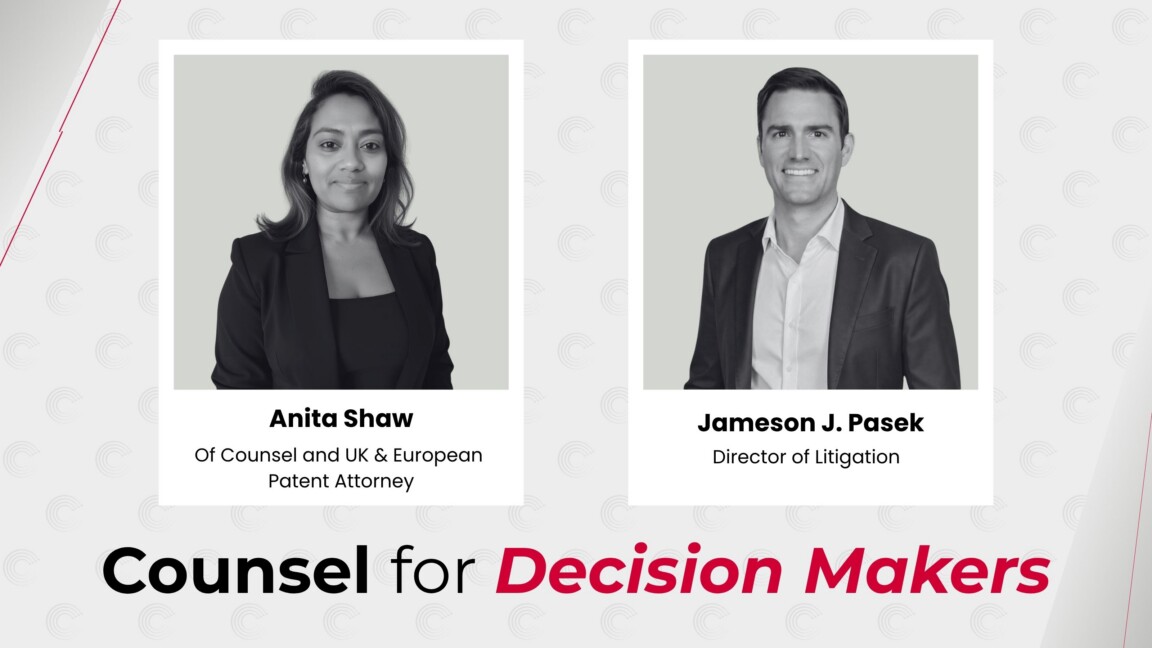
Written by Maria Alejandra Alvarado, Jameson Pasek, and Anita Shaw
Corporate legal teams are entering 2027 under a different set of expectations from the C-suite. Managing litigation, overseeing compliance and negotiating contracts remain core responsibilities, but chief executives increasingly want legal advisers involved in decisions that shape growth, competitive positioning and enterprise value.
The shift comes as businesses contend with accelerated artificial intelligence adoption, expanding data regulation, geopolitical uncertainty, and pressure to control costs.
A 2026 Gartner survey found that 80% of CEOs expect AI to require moderate or significant changes to their organizations’ operational capabilities. The findings point to a broader transformation in how companies operate and where executives expect strategic support.
The implication is clear: legal teams are increasingly expected to contribute to business strategy, anticipate challenges, and help leadership make decisions that support growth.
At Caldwell, Jameson Pasek, Director of Litigation Practices, and Anita Shaw, Of Counsel and UK & European Patent Attorney in the firm’s London office, work with companies navigating these challenges across technology, intellectual property, commercial relationships, and litigation.
Their experience highlights four expectations reshaping the relationship between CEOs and their legal advisers.
Early Legal Involvement Becomes a Competitive Advantage
Companies developing new technologies often invest substantially in research and product development before considering how to protect the resulting innovations.
Shaw said startups and scale-ups frequently seek legal advice shortly before launching a product, when potential conflicts with competitors or weaknesses in intellectual property protection become more urgent.
For example, a software company preparing to launch an AI-powered platform, may need to assess whether its technology qualifies for patent protection, whether competing patents create barriers to commercialization, and whether its brand is available in target markets.
These decisions become particularly important during fundraising.
Investors may discover that a company has filed several patents without a coherent strategy connecting those assets to its most valuable technology.
Shaw emphasizes the need to build sufficient runway into commercial plans in order to seek considered legal advice that a defensible portfolio requires considering patents, trade secrets, designs, copyright, brand, and data holistically.
Data Protection Adds Financial Exposure Across Jurisdictions
Data governance is also high on executive agendas as companies expand internationally and incorporate AI into commercial products.
First, the financial consequences of noncompliance differ substantially by jurisdiction. Under Europe’s General Data Protection Regulation (GDPR), serious violations can result in fines of up to €20 million or 4% of annual worldwide turnover, whichever is higher.
Conversely, California’s Consumer Privacy Act (CCPA) follows a different penalty structure. Current published thresholds allow administrative fines of up to $2,663 per violation, increasing to $7,988 for intentional violations and certain violations involving minors.
Those penalties can accumulate across violations, and regulators can require companies to change business practices.
For multinational businesses, compliance obligations also extend beyond privacy.
Shaw pointed to emerging European requirements addressing AI transparency, connected-device information and access to industrial data. These measures can create tensions when information subject to disclosure obligations also represents valuable proprietary know-how.
A manufacturer collecting data from connected vehicles, for example, may need to reconcile regulatory access requirements with efforts to protect commercially sensitive information.
Beyond the financial consequences of noncompliance, Pasek identified a broader shift in the focus of data regulation, from traditional data-security concerns centered on preventing unauthorized access to or disclosure of personal information toward emerging requirements that scrutinize whether companies collect, process, and retain more consumer and customer data than is reasonably necessary to provide their products or services.
AI Raises New Questions About Ownership and Investment Readiness
Artificial intelligence is introducing additional uncertainty into how companies create and own valuable assets.
Shaw said clients are increasingly concerned about the provenance of AI-generated software and marketing content, resulting in ownership rights and the treatment of confidential information entered into third-party systems.
These issues become particularly consequential in corporate transactions.
A software company preparing acquisition may need to demonstrate that it has sufficient rights to the code underpinning its products and explain how externally generated material was incorporated into development.
Pasek’s broader concern about protecting innovation reinforces the commercial stakes. Companies that fail to establish appropriate ownership and protection early may find themselves at a disadvantage when seeking investment or defending their technology against competitors.
The growing expectation is that legal teams help establish auditable processes before ownership questions become obstacles to financing or commercialization.
Commercial Agreements Can Determine Who Owns Future Innovation
Pasek identified ownership of intellectual property developed through commercial collaborations as another frequently underestimated risk.
He emphasized the distinction between background intellectual property, which a company brings into a partnership, and foreground intellectual property, which arises during the relationship.
In one aerospace engagement, an aircraft developer and a manufacturer spent months negotiating rights to engineering knowledge created during the manufacturing process.
The developer contributed proprietary aircraft designs, while the manufacturer brought expertise in component engineering.
The negotiations extended beyond ownership of the finished aircraft to improvements, technical discoveries and knowledge generated through the actual building of the prototype. This led to extensive discussions over which party would retain the rights to those innovations and how they could be used in future development. Such circumstances illustrate the commercial importance of distinguishing intellectual property owned before a partnership from intellectual property developed during it.
For businesses pursuing joint development, strategic manufacturing or research partnerships, contractual provisions can determine who controls commercially valuable improvements long after the original project concludes.
Legal Spending Faces Greater Commercial Scrutiny
Executives are also demanding stronger economic justification for legal spending.
“Winning a legal argument is only part of the equation. We also need to understand what litigation will cost the business, how much management attention it will require, and whether the potential outcome justifies that investment,” Pasek said.
This calculus becomes particularly important in complex, protracted disputes, where substantial litigation budgets may initially appear difficult to justify but damages models projecting significant potential recoveries can demonstrate the commercial rationale for pursuing a claim.
A company pursuing an infringement claim, for instance, may have strong legal arguments but still face management distractions. In some cases, a licensing deal or corporate transaction may deliver a better commercial outcome.
Meanwhile, pressure on internal budgets is changing how companies select outside advisers.
Shaw identified workload capacity and specialized expertise as the principal reasons businesses seek external counsel.
Her preferred approach is for advisers to “act like in-house counsel,” developing a sufficiently deep understanding of the client’s commercial priorities and technology to provide advice without repeatedly rebuilding that context.
As AI makes routine research and drafting more efficient, commercial understanding and specialized judgment are becoming increasingly important measures of legal value.
Strategic Judgment Moves to the Forefront
Companies will continue navigating evolving AI regulation, complex cross-border operations, intellectual property disputes, and demands for greater efficiency in 2027.
For CEOs, the value of legal counsel will increasingly rest on its contribution to business decisions: protecting innovation before competitors emerge, structuring partnerships that preserve future opportunities and evaluating risk in economic rather than purely legal terms.
As expectations of legal teams evolve, strategic advice matters more than ever. Connect with Caldwell’s team to discuss how legal strategy can support your company’s growth, protect enterprise value, and navigate complex business decisions.
GLOBAL COUNSEL FOR EXECUTIVE DECISION-MAKERS
Caldwell advises executives, investors, and business leaders on the decisions that drive enterprise value, supported by a global footprint.